
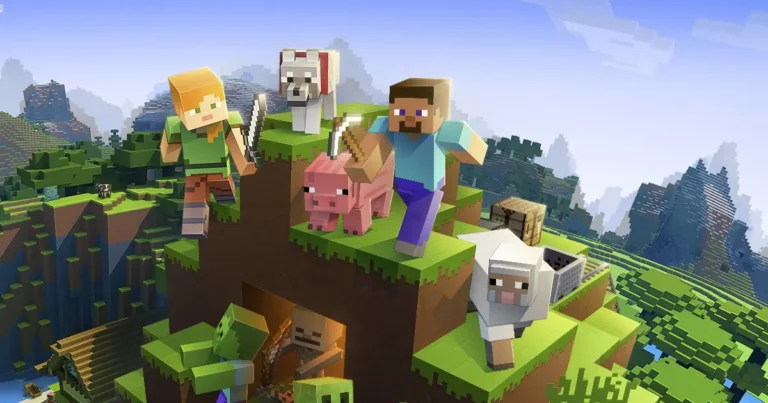
Minecraft is one of the best-selling video games of all time, and a big part of its charm is the living, breathing world full of animals. Whether you want a loyal wolf trotting beside you or a farm stocked with cows, sheep, and chickens – animals make the game feel alive.
But here is the thing: not every animal works the same way. Some you can tame. Some you can breed. Some you can do both. And some, looking at you, pandas – require a very specific setup before they even think about having babies.
This guide covers the complete list of tameable and breedable animals in Minecraft.
What Is the Difference Between Taming and Breeding?
Before jumping into the lists, let us quickly clear up the difference between the two. It is a common point of confusion – especially for newer players.
Taming means forming a bond with a wild animal so it becomes loyal to you. A tamed animal follows you around, sits when told, and may even fight for you.
Breeding means feeding two adult animals of the same species their preferred food to produce a baby. You do not need a tamed animal to breed – plenty of animals breed while staying completely wild.
Some animals fall into both categories. Wolves, for example, need to be tamed first, and then you can breed them. Others, like cows and sheep, skip taming entirely – just bring two of them some wheat and let nature do its thing.
According to the official Minecraft Wiki, taming mechanics vary significantly per mob – some require specific items, while others involve mounting or simply earning trust over time.
All Tameable Animals in Minecraft
There are six main mob types that can be fully tamed in Minecraft. Each one has a different method, and a few have quirks that regularly trip up players.
1. Wolf (Dog)
Wolves are arguably the most popular tameable animal in the game. To tame one, you feed it bones. Each bone gives roughly a 33% chance of taming – so do not be surprised if it takes half a stack before the collar appears.
- Taming item: Bones
- Where to find: Forests, taiga, and snowy biomes
- Bonus: Tamed wolves will fight alongside you and protect you from hostile mobs
One important note: do not accidentally hit a wolf while trying to tame it. That will turn all nearby wolves hostile, and suddenly your peaceful forest walk becomes very stressful.
2. Cat
Cats are tamed using raw cod or raw salmon. They spawn near villages, which makes them easier to find than most tameable mobs. Once tamed, they follow you, scare away creepers and phantoms, and occasionally bring you “gifts” in the morning.
- Taming item: Raw cod or raw salmon
- Where to find: Villages (stray cats), witch huts
- Fun fact: Cats come in 11 different coat variants
A common mistake – do not confuse ocelots with cats. As of Java Edition 1.14, ocelots are a completely separate mob and cannot be tamed. You can earn their trust with fish, but they will not follow you or sit.
3. Horse
Taming a horse works differently from most mobs. You do not feed it an item to start – you mount it repeatedly until it stops throwing you off. Feeding it apples, golden carrots, or golden apples beforehand speeds up the process.
- Taming method: Mount repeatedly until it accepts you
- Where to find: Plains and savanna biomes
- After taming: Equip a saddle to ride it properly
Horses have hidden speed, health, and jump stats that vary randomly. Breeders often breed many horses trying to land one with top-tier stats – a bit like real horse racing, minus the betting.
4. Donkey and Mule
Donkeys tame exactly like horses – repeated mounting. Mules cannot spawn naturally and can only be created by breeding a horse with a donkey. They inherit traits from both parents and can carry a chest.
- Taming method: Mount repeatedly
- Mule note: Breed a horse + donkey to create a mule; mules cannot breed further
5. Llama
Llamas also tame through repeated mounting. Once tamed, you can attach a chest to them for extra storage and lead them together in a caravan. They spit at enemies (and at each other, occasionally) which is both useful and deeply funny.
- Taming method: Mount repeatedly
- Where to find: Windswept hills, savanna, and with wandering traders
6. Parrot
Parrots tame with seeds – wheat seeds, melon seeds, pumpkin seeds, or beetroot seeds all work. Once tamed, they perch on your shoulder and mimic nearby mob sounds, which is either charming or deeply unsettling depending on your mood.
- Taming item: Any seeds
- Where to find: Jungles
- Critical warning: Never feed a parrot a cookie. Cookies contain cocoa, which is toxic to real parrots – Mojang modeled this accurately. Feeding a cookie to a tamed parrot will instantly kill it.
All Breedable Animals in Minecraft
Breeding in Minecraft is straightforward in concept: find two adults of the same species, give each one the right food, and watch the hearts appear. Each successful breeding attempt drops one to seven experience points.
Here is the complete list of breedable animals, organized by food type.
Breedable with Wheat
- Cow – Produces milk, raw beef, and leather. One of the most useful farm animals in the game.
- Sheep – Wool color is inherited from parents and can be mixed. Red and yellow parents can produce orange offspring.
- Goat – Found in mountain biomes. Provides milk and occasionally drops goat horns when it rams a solid block.
- Mooshroom – A rare mushroom-covered cow variant found only in mushroom fields biomes. Can provide mushroom stew indefinitely.
Breedable with Carrots, Potatoes, or Beetroots
- Pig – Drops pork chops. Can also be ridden with a saddle and controlled using a carrot on a stick.
Breedable with Seeds
- Chicken – Any seed type works. Chickens drop feathers (essential for arrows) and eggs, which can hatch into chicks without breeding.
Breedable with Raw Fish (After Taming)
- Wolf – Must be tamed first. Breed with any raw or cooked meat, or even rotten flesh.
- Cat – Must be tamed first. Breed with raw cod or raw salmon.
Breedable with Tropical Fish Buckets
- Axolotl – These quirky aquatic creatures breed using buckets of tropical fish (not raw tropical fish items). Each baby has a 1-in-1,200 chance of being the ultra-rare blue variant, which mirrors the approximate real-world axolotl population in the wild.
Breedable with Flowers
- Bee – Any flower works. Bees produce honey and honeycombs, which are used in crafting beehives and making blocks of honey.
Breedable with Seagrass
- Turtle – Baby turtles drop scutes as they grow, which craft turtle shell helmets. The breeding mechanics also tie into the Water Breathing potion.
Breedable with Bamboo
- Panda – This one has a catch. Both pandas must be within five blocks of eight bamboo stalks before they will breed. Pandas also have a hidden genetics system — babies can inherit traits like being lazy, playful, aggressive, or weak.
Breedable with Slimeballs
- Frog – After breeding, frogs lay frogspawn in water. The frogspawn hatches into tadpoles, and the frog color of the grown tadpole depends on which biome it grows up in — warm biomes produce warm frogs, and so on.
Breedable with Sweet Berries or Glow Berries
- Fox – Foxes cannot be directly tamed from the wild. However, breeding two foxes produces a baby fox that naturally trusts the player. The baby will follow and defend you without any additional effort.
Breedable with Crimson Fungi (Nether Only)
- Hoglin – Hoglins are the only hostile mob in the game that can be bred. You will find them in the Nether, and yes, they will attack you during the whole process. Worth noting: when hoglins enter the Overworld, they transform into Zoglins, which cannot be bred.
- Strider – Striders are passive Nether mobs that walk on lava. They breed with warped fungi. While getting to them is the tricky part (you need to cross lava), they are breedable and can be saddled and ridden.
Animals That Gain Trust But Cannot Be Fully Tamed
Not every animal relationship in Minecraft is a full tame. Some animals only become comfortable around you under specific conditions.
Ocelot
As of Java Edition 1.14, ocelots cannot be tamed. Feeding them raw fish causes them to stop fleeing and gain trust, but they will not follow you or sit on command. Ocelots and cats are now two completely separate mobs.
Allay
Give an allay a block or item, and it will search for matching items in the world and bring them to you — or to a recently activated note block. Unlike other mobs, an allay can lose its trust if you take the item away from it.
Quick Reference: Tameable and Breedable Animals at a Glance
Tameable Only (no breeding without taming first):
- Wolf (tame first, then breed)
- Cat (tame first, then breed)
- Horse, Donkey, Mule
- Llama
- Parrot
Breedable Only (no taming required):
- Cow, Sheep, Goat, Mooshroom
- Pig, Chicken
- Bee, Turtle, Panda
- Frog, Fox
- Axolotl
- Hoglin, Strider
Common Mistakes to Avoid
Even experienced players make these errors. Here is what to watch for:
- Feeding a cookie to a parrot – this instantly kills it. Use seeds only.
- Trying to tame an ocelot – you can earn trust, but not full taming. Find a stray cat in a village instead.
- Not having enough food before breeding – breeding 20 cows requires at least 20 wheat upfront for the first round, then more to speed up baby growth.
- Forgetting the bamboo for pandas – you need at least eight bamboo blocks nearby before pandas will enter breeding mode.
- Hitting a wolf by mistake – this triggers all nearby wolves to become hostile. Go carefully.
Final Thoughts
Minecraft’s animal system is deeper than it first appears. From the fox breeding trick (breed two wild foxes to get a trusting kit) to the genuine 1-in-1,200 odds for a blue axolotl – there is a surprising amount of nuance packed into what looks like a simple farming mechanic.
Once you understand how each animal works, building a thriving farm or assembling a wolf pack with a parrot on your shoulder stops being confusing and becomes genuinely enjoyable.
All mechanics described in this article reflect the official Minecraft Wiki and verified gameplay behavior across both Java and Bedrock editions. Always check the official Minecraft Wiki for the most current version-specific changes.