Warning: Major spoilers ahead for the “DTF St. Louis” series finale on HBO Max.
The DTF St. Louis finale reveals that nobody killed Floyd Smernitch. Instead, Floyd poisoned his own Bloody Mary and died by suicide at the community pool, turning the murder mystery into a tragic story about loneliness, middle age, and emotional collapse. Creator Steven Conrad confirmed the ending was always meant to focus on Floyd’s quiet despair rather than a traditional killer reveal.
If you spent seven episodes trying to figure out who killed Floyd Smernitch, here’s the gut punch: nobody did.
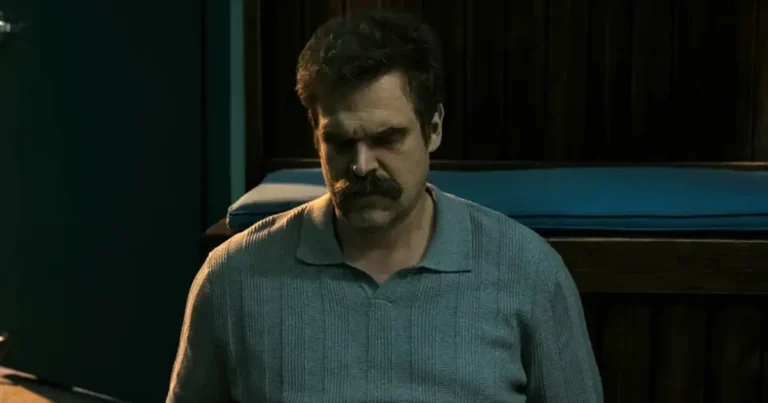
The finale of HBO’s limited series “DTF St. Louis,” which aired on April 12, revealed that Floyd (played by David Harbour) poisoned his own Bloody Mary and drank it himself. There was no murder. No villain. Just a deeply lonely middle-aged man who quietly decided he had nothing left to hold onto.
Who Really Killed Floyd in DTF St. Louis?
The show spent its entire run dangling suspects in front of viewers. Floyd’s best friend Clark Forrest (Jason Bateman), a local weatherman, was sleeping with Floyd’s wife Carol (Linda Cardellini). Carol had just taken out a massive life insurance policy on Floyd. Even Floyd’s troubled stepson Richard (Arlan Ruf) seemed like a possible culprit.
But the truth turned out to be far more heartbreaking than any of that.
Floyd dosed his own drink at the Kevin Kline Community Pool Center, fully aware of what he was doing. In his final moments, he spotted Richard walking in and signed “I love you” to his stepson before it was too late.
Creator Steven Conrad Opens Up
Show creator Steven Conrad told Variety that the ending was always heading here. “You can’t tell anybody what is really hurting,” Conrad said. “You can only pretend like some trivial things might help.”
For Conrad, the show was never really about who killed Floyd. It was about the quiet devastation of reaching middle age and feeling like life has passed you by. Floyd’s one true bright spot that summer was his unlikely friendship with Clark, but even that wasn’t enough to pull him back.
“If he had only been able to maybe say more to Clark, who knows how they might have chosen to spend that last week,” Conrad added.
The Other Big Mystery, Solved
The show also finally answered the long-running question about Floyd’s physical injury, and the answer involved Richard again.
After multiple teases and near-reveals, it turned out that a young Richard had attacked Floyd after watching Carol break down one day. Richard, whose biological father had been abusive, acted out of instinct to protect his mother. Floyd understood exactly why it happened and never held it against the boy.
Conrad explained that Floyd’s ability to forgive that moment is both his greatest quality and part of what made his situation so tragic. He could understand everyone around him, but couldn’t save himself.
Why the Finale Ends on Clark
The final shot of the series lingers on Clark, alone and adrift, sitting on a swing set. It is a callback to the very beginning, where Clark first hatched the idea of the DTF app by peering over a neighbor’s fence, wondering what he was missing in life.
Conrad said that image was meant to capture the show’s central idea: adults still carry that childhood need to run free and blow off steam, but life no longer gives them a recess to do it in. Clark’s attempts to find that release blew up spectacularly.
What Happens to Carol and the Insurance Money
One practical question the finale raises is whether Carol gets the life insurance payout. Conrad confirmed she would not. Since she helps the detectives conclude that Floyd took his own life, the policy would be void. But Conrad made it clear Carol was not thinking about the money. She wanted Richard to know that the last thing Floyd ever communicated to him was love.
The Bottom Line
“DTF St. Louis” turned out to be something rare on television: a mystery show that was never really about the mystery. It was about loneliness, middle age, and the quiet ways people fall apart when they cannot say what is truly hurting them.
If you have not watched it yet, it is now streaming in full on HBO Max. This one is worth your time.
Have thoughts on the finale? Drop them in the comments below and tell us whether the ending hit you the way it was meant to.