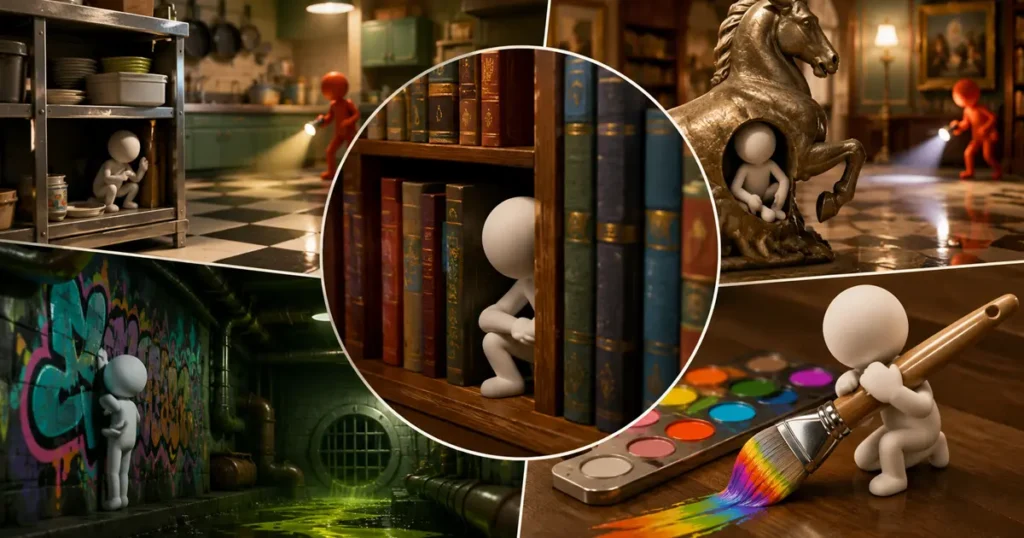

Meccha Chameleon has become one of the most addictive hide-and-seek games on Steam, and it is easy to see why. You and your friends play as white 3D stick characters who can paint their bodies to blend into the environment, while one or more hunters try to track everyone down before time runs out.
Winning is not about luck. The game rewards players who think like a set designer, matching surfaces, choosing the right geometry, and settling into a hiding spot a seeker will not bother checking twice. Here is everything you need to know to stay hidden longer and rack up more points.
How Hiding and Scoring Works
Every round gives hiders a short prep window to explore the map, paint their character, and lock into a pose before the hunting phase begins. Budgeting that time matters more than most players realize. Spending too long wandering around looking for the perfect spot often means you are still half-painted when the seekers arrive, and a half-painted body is an easy catch.
Once the round starts, you can use the Free Camera setting to watch what the hunters are doing. Press the 5 key to target and follow a specific hunter, or press 4 to switch to a full free-roam view of the map.
Scoring favors risk. Hiding in a spot that is likely to be seen earns more points than tucking yourself into a corner where no one will ever look, as long as you are well camouflaged enough to avoid getting caught outright. A good strategy is picking a spot on a walking path instead of hiding far off the beaten route, since that is where your point total starts climbing.
If you think a hunter has spotted you, run. You have a real chance of escaping, and staying in view of a hunter without getting tagged also boosts your score.
Also read: How to Play Meccha Chameleon With Friends
Best Hiding Spots by Map
The Mansion
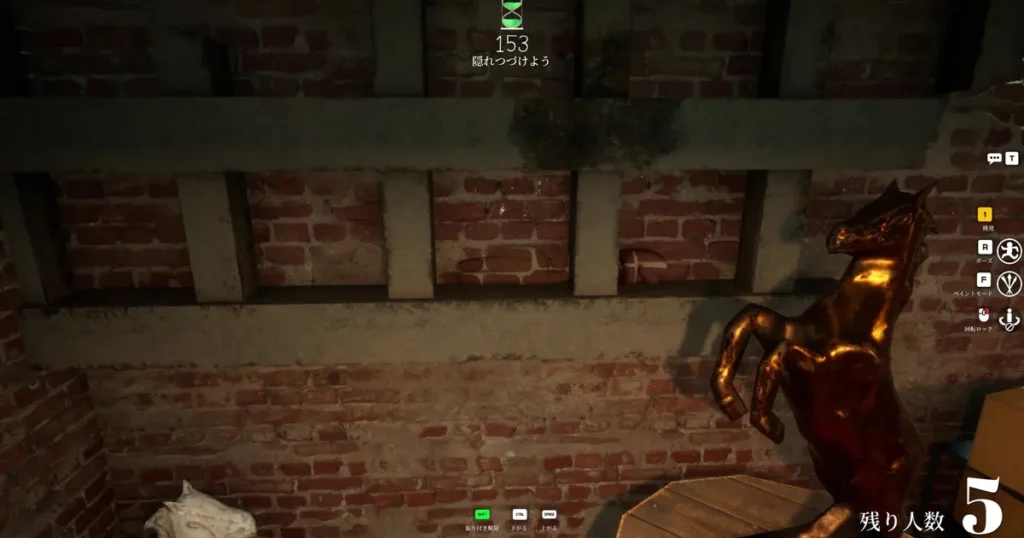
The Mansion is the most content-rich map currently available, with around 11 confirmed hiding spots. That makes it the best map to practice on, since the variety forces you to develop different painting styles instead of relying on one trick.
The library is one of the strongest options. Crouch among the books and paint yourself to match the spines, since seekers scan rooms at standing height and a crouched silhouette against book-shaped geometry tends to disappear.
The horse statue is a more creative pick. Paint to match the statue’s surface and tuck yourself inside it. Seekers often walk right past it without a second look.
Kitchen shelving units work better than open shelves because the geometry breaks up your outline. Crouching inside one is more reliable than trying to blend with an exposed shelf.
The kitchen wall poster is an underrated spot. Paint yourself to resemble the poster instead of hiding behind nearby furniture. It is a flat surface with a predictable pattern, and seekers rarely stop to examine wall art closely.
Bathroom tiles offer a repeating pattern that rewards precise painting, but imperfect work stands out fast here. Only attempt this spot if you are confident in your color matching.
Wooden arch walls are achievable with moderate skill and sit in a mid-traffic area that seekers usually pass through rather than stop and inspect.
Hallway paintings round out the list. Paint yourself to resemble one of the hanging paintings for a spot that blends into the décor seekers expect to see.
The Sewer
The Sewer is the most divisive map in the current rotation. It has fewer hiding options and is less forgiving for players who have not mastered dark, uniform surfaces, but four spots consistently hold up.
The graffiti walls are the strongest category of hiding spot on this map. There are two separate graffiti sections, and both work well because the chaotic, multi-color pattern is genuinely difficult for seekers to read at a glance.
The ceiling area behind a pipe, in the darkest section of the map, is the hardest spot for seekers to clear. The combination of elevation and shadow hides small painting mistakes, which makes it accessible even if you have not fully mastered the paint tool yet.
Lying on top of oil barrels is riskier than it sounds. The curved surface and open sightlines around it make this a medium-risk option best suited for players chasing extra points for visibility.
Other Maps
The Penguin Hotel map is still being tested and documented by the community, but the same core principles apply. Look for pattern-rich surfaces like checkered floors and busy decorations, lean on shadow and partial darkness to cover small imperfections, blend into clusters of similar objects rather than matching one unique surface, and use boundary zones between two different areas so you can pick whichever side is easier to match.
Mastering the Paint Tool
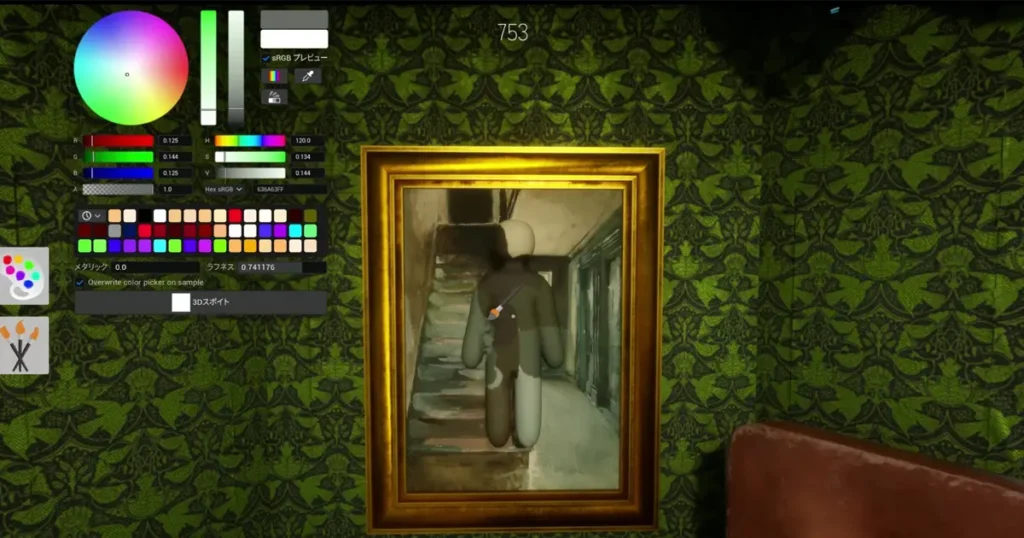
Painting is the skill that separates top players from everyone else in Meccha Chameleon. The game’s 3D eyedropper tool lets you sample precise colors directly from nearby walls, floors, and props, similar to the eyedropper tool in Photoshop. Learning the keybind by heart will save you valuable seconds during prep.
You can also hold space and move your mouse around the environment to sample colors on the fly, which speeds up blending significantly once you get used to it.
A reliable painting process looks like this. First, sample the base color from the dominant surface you are blending into. Second, sample a darker shadow color from a shaded part of the same surface, since most environments have distinct lit and shaded tones. Third, block-fill both colors in large sections to establish lighting and depth instead of using one flat shade. Fourth, add fine details like brick seams, wood grain, or brush strokes last, since these are the finishing touches that sell the disguise.
Pressing F opens the paint tool, and using the HSV sliders to fine-tune your shade is faster and more accurate than guessing your way to a close match. The goal is not just picking a similar color. It is replicating the exact texture, lighting, and pattern of the surface around you.
Visually complex or cluttered areas are more forgiving than large, empty walls. The more objects and colors nearby, the more a seeker’s eyes have to work, which makes you blend in as just another object instead of standing out. Clutter in the middle of a room often beats a corner, since corners are the first place most seekers check out of habit.
Pose and Silhouette Tips
Seekers spot human silhouettes faster than they catch small color mismatches, so your pose matters just as much as your paint job. Crouching, lying down, and pressing flat against a wall are all confirmed poses, with more added in recent updates.
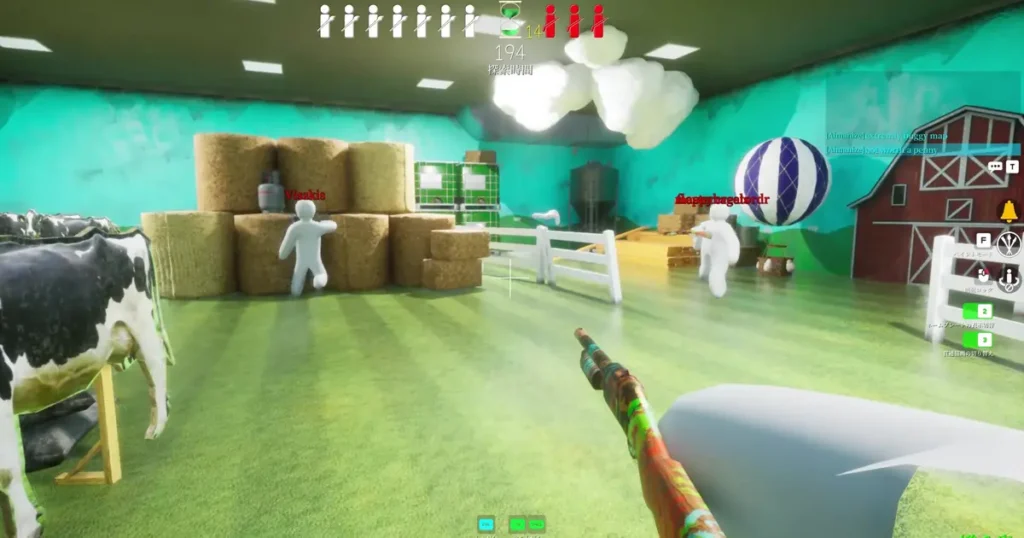
Match your silhouette to a real object nearby. Curl into a ball next to a balloon, or flatten out beside a painting. The right pose for a spot is not always obvious, so cycling through your available poses to see which one breaks your outline best is worth the extra few seconds.
Once you lock in a pose, stay completely still. Micro-movements, including small camera adjustments, are one of the biggest tells experienced seekers watch for. Plan an escape route during prep if you think you might need one, but avoid glancing toward it once the round starts, since unnecessary movement draws attention fast.
Advanced Tricks Worth Trying
Attaching yourself to a wall above a large doorway, matching the wall color, and writing “Enter” or “Exit” on your body can turn you into a believable decorative sign. The same logic applies to statues. Position yourself as a piece that would not normally be there, like an extra lock of hair, for a spot-the-difference style disguise.
Most players do not look up. That habit carries over from real life into Meccha Chameleon, which opens up an entire category of overhead hiding spots that seekers tend to overlook during a quick sweep.
Wedging yourself into a small gap, like the space between a wall and a large object, can trigger a cover warning if you are too hidden for the game to consider it fair. If you get that warning, move in small increments to find the wiggle room that keeps you hidden without crossing into a fully covered position.
Never hide in the same spot twice with the same group. No matter how good a location is, repeat use makes it predictable, and players you have fooled once will check that spot first the next time around.
Common Mistakes to Avoid
Many newcomers obsess over total invisibility and end up standing out more as a result. The actual goal is not disappearing completely. It is making a seeker spend enough time questioning whether you are a player or a prop that the clock runs out before they decide.
Open rooms with flat surfaces are the hardest environments to hide in. If you end up stuck in one, lying flat and matching the floor pattern exactly is usually your best option, even though it is still a tougher round than average.
A good group drill for improving faster is letting one player hide for ten seconds, then asking the seeker what looked wrong first. Connecting each loss to one specific decision, whether it was color, pose, or placement, makes it much easier to fix mistakes in future rounds.
Final Thoughts
Meccha Chameleon rewards patience, observation, and precision over fast reflexes. Learning the best hiding spots on each map gives you a head start, but pairing that knowledge with sharp painting and smart pose choices is what actually keeps you hidden until the timer hits zero.
Ready to put these tricks to the test? Jump into your next Meccha Chameleon match and see how long you can stay hidden.